
Ever felt that electric buzz of anticipation as the roulette wheel spins, or the satisfying shuffle of cards in a blackjack game? Casinos, with their dazzling lights and promises of fortune, hold an undeniable allure. But beneath the surface of glitz and glamour lies a fundamental question: can you actually beat the house?
This article cuts through the noise and casino myths, offering a realistic look at the odds, the house edge, and the gambling strategies that might tilt the scales ever so slightly in your favor. Forget about guaranteed riches; we’re diving into the probabilities, exploring which casino games offer the best (and worst) chances of winning, and examining whether skill-based approaches or carefully managed bankrolls can truly make a difference. Prepare for an honest assessment of your winning odds. Let’s explore the world of casino games with open eyes and a healthy dose of skepticism.
Understanding the House Edge
The “house edge” represents the mathematical advantage a casino holds over players in any given game. It’s the built-in profit margin that ensures the casino’s long-term profitability. Expressed as a percentage, the house edge indicates how much of each wager the casino expects to retain over time. This isn’t about luck; it’s about probability. Every game, from slot machines to blackjack, is designed with a house edge baked into its rules and payouts.
The opposite of the house edge is the “Return to Player” (RTP) percentage. If a game has a 97% RTP, the house edge is 3%. Theoretically, for every $100 wagered, the player receives $97 back in the long run, while the casino keeps $3. However, it is important to remember that RTP is theoretical in nature. Observed outcomes can vary wildly in the short run due to random fluctuations.
While the house edge guarantees the casino’s profit over countless plays, individual players can still win in the short term. Luck, variance, and smart gameplay all contribute to temporary victories. However, the math always wins in the end. The house edge chips away at players’ bankrolls over time, making it crucial to understand its impact and choose games wisely.
How the House Edge Works
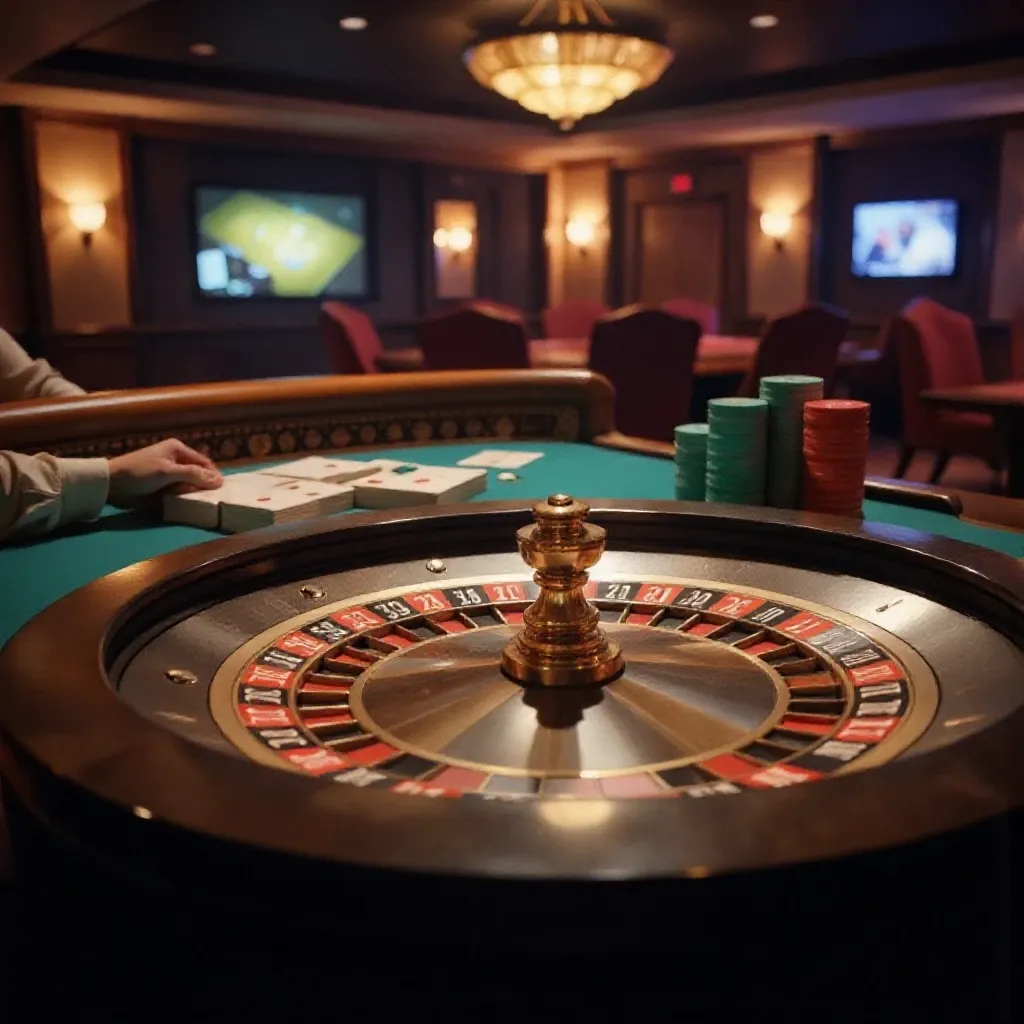
The house edge calculation is rooted in probability and game rules. Consider American roulette, featuring numbers 1-36, plus 0 and 00. A bet on a single number pays out 35 to 1. However, the true odds of hitting that number are 37 to 1, reflecting the 38 possible outcomes. This difference—the gap between the payout and the true odds—creates the house edge. In this case, around 5.26%
Even slight variations in game rules can dramatically alter the house edge. Blackjack which can have a low edge, but varies wildly depending on the specific rules of the game, player skill, and strategy implementation This highlights the importance of understanding rules before playing.
Popular Casino Games and Their Odds
Understanding the odds in casino games is crucial for making informed decisions and managing your bankroll effectively. The “house edge” represents the casino’s average profit from each game. Knowing the house edge allows players to compare games and choose those that offer a better chance of winning. Here’s a quick look at the house edge in some popular casino games:
| Game | House Edge (Approximate) |
|---|---|
| Blackjack (with optimal strategy) | 0.5% – 1% |
| Baccarat | 1% – 1.5% |
| Craps (pass/don’t pass line) | 1.41% |
| Roulette (European) | 2.7% |
| Roulette (American) | 5.26% |
| Video Poker (Deuces Wild) | 0.76% |
| Slot Machines | 2% – 15% |
It’s important to note that slot machine odds can vary significantly between different machines. Return to Player (RTP) percentages are usually indicated for players. Also the skill element in games like blackjack and poker can significantly influence individual results, pushing results either way.
Games with the Best Odds
For players seeking the most favorable odds, certain games stand out. Blackjack, when played with a sound strategy, typically offers a low house edge and favorable odds. This involves learning basic strategy charts and making optimal decisions based on the cards you hold and the dealer’s upcard. Video poker, particularly certain variants like Deuces Wild or Jacks or Better, can also provide excellent odds, sometimes approaching even odds with optimal play.
Baccarat, specifically betting on the banker, generally has a low house edge, making it a popular choice among players looking for a simple game with decent odds. Unlike poker, prior experience is not needed and relies purely on luck. Choosing the right games, and learning and applying optimal strategies when available, can significantly improve your chances of success.
Games to Approach with Caution
Some casino games come with a higher house edge, making them less favorable for players looking to maximize their winning potential. Slot machines, while visually appealing and entertaining, often have the highest house edges, and should be approached with mindful bets on specific games.
Keno is another game with very high house advantage, sometimes exceeding 20%, and is not recommended for players looking for an edge. Also bets on certain games like Roulette in particular provide less favorable odds than it needs to be. Craps, while offering exciting gameplay, can be subject to fluctuations in the short run, and also result in drastic losses when played fast.
Debunking Gambling Myths and Misconceptions
The world of gambling is rife with myths and misconceptions that can lead to poor decision-making and ultimately, losses. It’s crucial to understand and debunk these fallacies to approach gambling with a clear and rational mindset. Many believe in strategies or superstitions that give them an edge, but in reality, gambling outcomes are largely governed by chance. Understanding concepts like the gambler’s fallacy, the illusion of hot streaks, and the futility of betting systems is essential for anyone engaging in gambling activities.
The Gambler’s Fallacy
The gambler’s fallacy is the mistaken belief that if something happens more frequently than normal during a given period, it will happen less frequently in the future (or vice versa). This is incorrect because many gambling scenarios involve independent events. For example, if a coin lands on heads five times in a row, the probability of it landing on tails on the next flip is still 50%. Each flip is an independent event. The previous outcomes have no bearing on the next. Similarly, in roulette, if the ball has landed on black several times consecutively, the odds of it landing on red remain the same. Past results do not influence future probability.
The Myth of Hot Streaks
The idea of ‘hot streaks’ in gambling is another common misconception. While it might seem like someone is on a winning streak due to skill or luck, these streaks are typically just normal fluctuations within a random statistical distribution. Variance plays a significant role; sometimes, purely by chance, a person will experience a series of wins. However, these streaks are not sustainable. Over time, the luck will balance out, and the house edge will prevail. Remember that even in a random sequence, clusters of similar outcomes can and do occur.
Strategies for Minimizing Losses (and Maybe Winning)
While guaranteed wins in gambling are a myth, employing smart strategies can significantly minimize losses and potentially tilt the odds slightly in your favor. This involves a combination of understanding game mechanics, disciplined bankroll management, and, for some, exploring more advanced techniques. Let’s explore some actionable techniques.
Bankroll Management
Treating your gambling funds as a business investment, not just entertainment money, is crucial. Effective bankroll management starts with setting clear betting limits. Decide on a fixed percentage of your bankroll you’re willing to risk per hand or game. Next, create a strict gambling budget – an amount you can comfortably afford to lose – and absolutely do not exceed it. Implement stop-loss orders: If you reach a predetermined loss threshold, walk away. Conversely, set realistic profit goals. Hitting a smaller, achievable target and cashing out is often wiser than chasing increasingly elusive big wins. Solid risk management is the cornerstone of a sustainable gambling approach.
Understanding Basic Blackjack Strategy
Blackjack, unlike many casino games, offers players a degree of control through strategic decision-making. A basic blackjack strategy chart is your best friend – a visual guide dictating the optimal move in any given situation. Learn how to read it. The chart advises when to hit (take another card), stand (end your turn), split (separate a pair into two hands), or double down (double your bet and take one more card). For example, if you have a hard 16 against a dealer’s 10, the chart will tell you to hit. While mastering this strategy won’t guarantee wins (the house still has an edge), it significantly reduces the casino’s advantage by helping you make statistically sound decisions.

The Psychology of Gambling
Gambling, at its core, is a complex interplay of chance and human psychology. Understanding the underlying psychological factors that drive gambling behavior is crucial for both preventing and addressing problem gambling. Several cognitive biases significantly influence decision-making in gambling scenarios. One of the most prominent is loss aversion, the tendency to feel the pain of a loss more strongly than the pleasure of an equivalent gain. This can lead individuals to make irrational decisions in an attempt to avoid losses, even if those attempts increase their overall risk.
Confirmation bias also plays a role, where gamblers tend to seek out and interpret information that confirms their existing beliefs or strategies, even if that information is flawed or misleading. This can create a false sense of control and contribute to overconfidence. A particularly dangerous consequence of these biases is “chasing losses,” where individuals attempt to recoup their losses by gambling more, often leading to a cycle of increasing debt and despair. Breaking this cycle requires developing strong emotional control and impulse control skills.
Emotional control is the ability to manage and regulate one’s emotions, particularly in response to the highs and lows of gambling. Impulse control involves resisting the urge to gamble, especially when experiencing strong emotions like anxiety, stress, or excitement. Techniques for improving impulse control include setting limits on time and money spent gambling, seeking support from friends and family, and practicing mindfulness and relaxation techniques. By understanding these psychological factors and developing effective coping strategies, individuals can make more rational decisions and avoid the pitfalls of problem gambling.
Responsible Gambling Practices
Responsible gambling is about staying in control and making informed decisions about your gambling habits. It’s crucial to establish limits for both time and money spent. Before engaging in any form of gambling, decide on a budget you’re comfortable losing and stick to it. Similarly, set a time limit and avoid exceeding it, regardless of whether you’re winning or losing.
Gambling addiction, also known as problem gambling, can have serious consequences. Some signs of problem gambling include preoccupation with gambling, chasing losses, gambling with increasing amounts of money, neglecting responsibilities, and lying to conceal gambling activities. If you recognize these signs in yourself or someone you know, it’s essential to seek help.
Many resources are available to assist with problem gambling. Gambling helplines offer confidential support and guidance. Self-exclusion programs allow individuals to ban themselves from gambling venues. Responsible gambling tools, such as deposit limits and reality checks, can help manage gambling behavior. Taking proactive steps can help to prevent gambling from becoming a problem.
Conclusion
Understanding the house edge and implementing solid risk management strategies are vital for anyone engaging in gambling activities. Making informed decisions, grounded in knowledge and self-awareness, drastically improves one’s chances of maintaining control and enjoying the experience.
The facts presented aims to empower individuals to approach gambling with a clear understanding of the underlying probabilities and potential pitfalls. Gambling, at its core, should be viewed as a form of entertainment. By embracing responsible gambling practices, individuals can minimize the risks and maximize the entertainment value, ensuring that it remains a pleasurable and controlled activity.